Ancient Egypt & Nubia
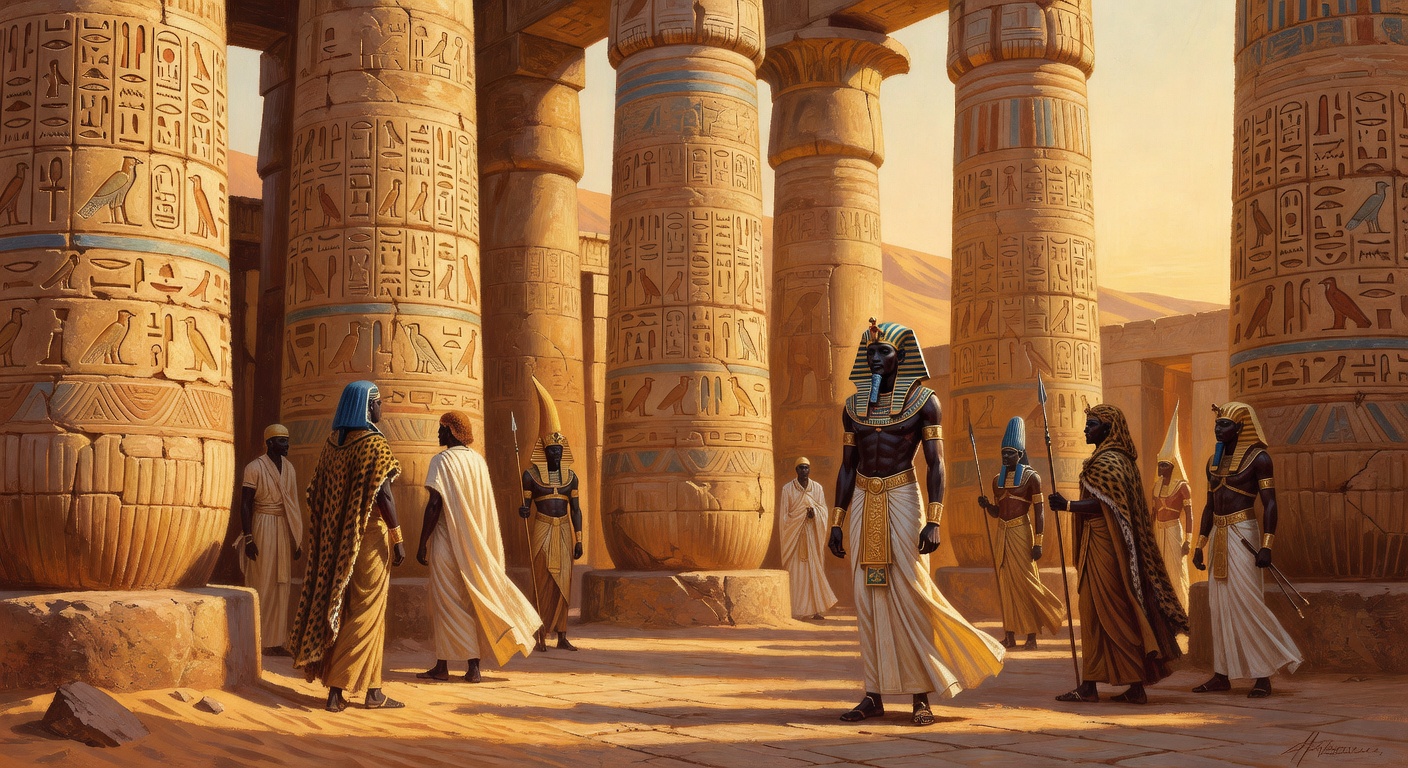
Long before the Moors crossed into Iberia, the foundations of their civilization were being laid along the banks of the Nile. Ancient Egypt — Kemet to its own people — produced a culture of monumental achievement in architecture, mathematics, medicine, and written language. The great pyramids of Giza, the temples of Karnak, and the vast bureaucratic state that maintained them represent one of humanity’s earliest and most enduring experiments in organized civilization.
To the south lay Nubia, the land of Kush, a kingdom that rivaled Egypt in power and sophistication. During the 25th Dynasty (circa 747–656 BC), the Black Pharaohs of Nubia conquered and ruled all of Egypt, reunifying a fractured land and reviving the construction of pyramids. Pharaohs like Piye, Shabaka, and Taharqa restored temples, expanded trade networks, and defended the Nile Valley against Assyrian invasion. Their reign proved that African civilizations south of the Sahara were not peripheral to the ancient world — they were central to it.
The cultural DNA of Kemet and Kush flowed westward across North Africa over millennia, carried by trade routes, migrating peoples, and shared religious traditions. When the Moors later built their own great civilization, they inherited a legacy stretching back thousands of years — a legacy of African peoples building empires, advancing knowledge, and shaping the course of human history.
Carthage & the Phoenician Era
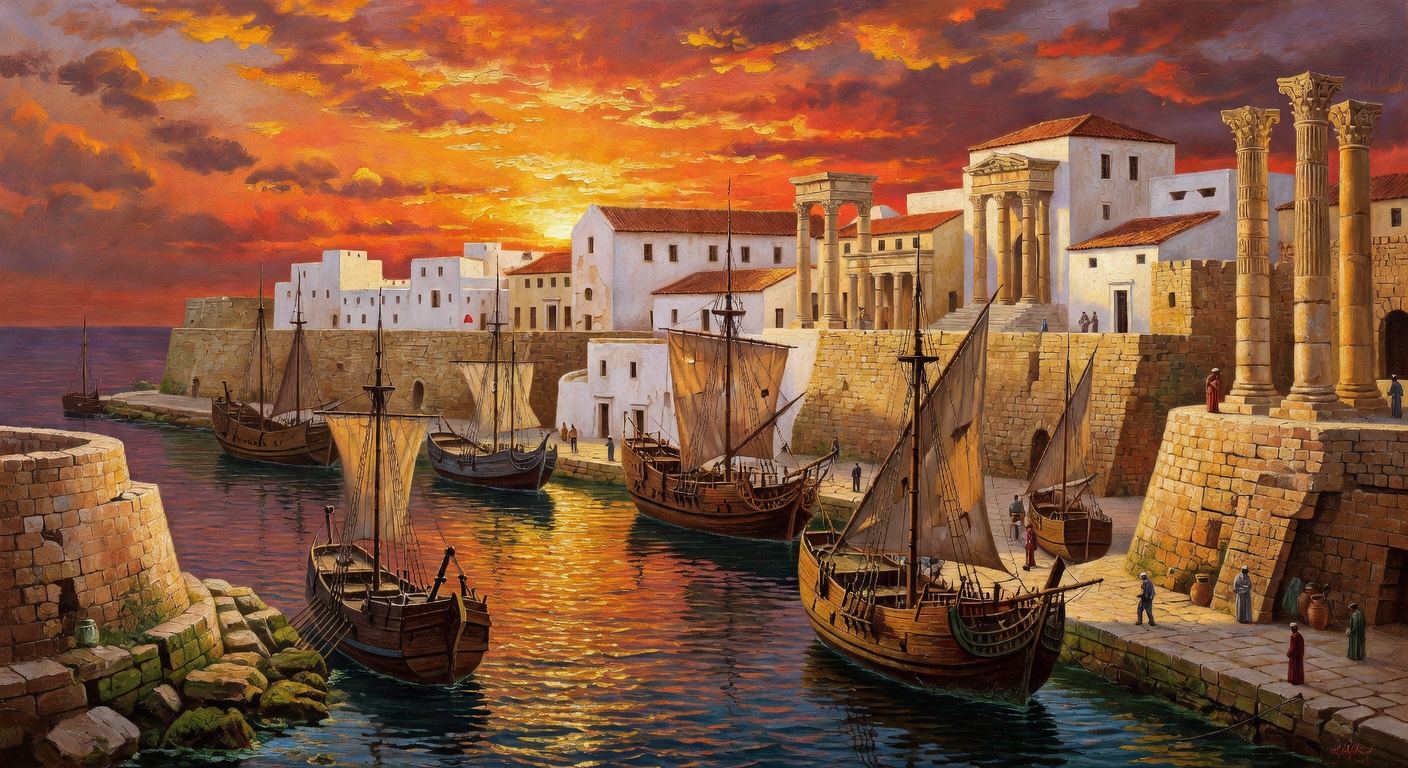
Founded around 814 BC by Phoenician settlers on the coast of modern-day Tunisia, Carthage grew into one of the ancient world’s greatest maritime powers. At its height, Carthaginian trade networks stretched from the tin mines of Britain to the gold fields of West Africa, and its navy dominated the western Mediterranean. The city itself was a marvel of urban planning, with a sophisticated harbor system, multi-story buildings, and a population that may have exceeded 300,000 — rivaling Rome and Alexandria.
No figure from Carthage looms larger in history than Hannibal Barca, the military genius who marched an army — complete with war elephants — across the Alps to invade Rome itself during the Second Punic War (218–201 BC). For over fifteen years Hannibal campaigned on Italian soil, winning devastating victories at Trebia, Lake Trasimene, and Cannae. His tactics are still studied in military academies worldwide. Though Carthage ultimately fell to Rome in 146 BC, its legacy as a North African superpower endured in the collective memory of the region’s peoples.
Carthage represented something profound: proof that North Africa could produce a civilization capable of challenging the mightiest empires on earth. The Berber peoples who formed the backbone of Carthaginian armies and populated its hinterlands would carry this tradition of resistance and statecraft forward through the centuries, eventually becoming a key component of the Moorish world.
Roman North Africa
After the destruction of Carthage, Rome absorbed North Africa into its expanding empire, transforming the region into one of the wealthiest and most productive provinces in the Roman world. Cities like Leptis Magna, Volubilis, Timgad, and Hippo Regius became showcases of Roman urban design, complete with forums, theaters, bathhouses, and triumphal arches. North Africa served as the breadbasket of Rome, its fertile plains producing vast quantities of grain and olive oil that fed the imperial capital.
Yet Roman domination was never absolute. Berber kingdoms like Numidia and Mauretania maintained varying degrees of autonomy, and Berber resistance to Roman control flared repeatedly. Figures like Jugurtha of Numidia, who waged a guerrilla war against Rome from 112 to 106 BC, and Tacfarinas, who led a revolt in the first century AD, demonstrated that the indigenous peoples of North Africa were never fully subjugated. They preserved their languages, customs, and identity beneath the Roman veneer.
Roman North Africa also produced towering intellectual figures. Saint Augustine of Hippo (354–430 AD), born in what is now Algeria to a Berber mother, became one of the most influential theologians in Western history. His works, including Confessions and The City of God, shaped Christian thought for over a thousand years. Apuleius, another North African, wrote The Golden Ass, the only complete Latin novel to survive from antiquity. These achievements remind us that North Africa was not a backwater but a vital center of the Roman intellectual world.
The Rise of Islam in Africa
The death of the Prophet Muhammad in 632 AD unleashed one of the most rapid expansions in world history. Within a single generation, Arab armies swept out of the Arabian Peninsula and conquered the Persian Empire, much of the Byzantine world, and the entirety of North Africa. Egypt fell in 642, and by 698 the ancient city of Carthage had been taken by Umayyad forces. The Arab conquest of the Maghreb — the western lands of North Africa — was one of the defining events in the formation of the Moorish world.
The conquest was not without fierce resistance. The Berber queen Dihya (known to Arab historians as al-Kahina) led a formidable campaign against the Umayyad armies in the late seventh century, defeating them in a major battle before ultimately being overwhelmed. Berber chieftain Kusaila similarly resisted Arab rule for years. These figures are remembered as symbols of indigenous North African defiance, and their resistance shaped the character of the Islam that eventually took root in the region — one that blended Arab theology with Berber traditions and identity.
By the early eighth century, the Berbers of North Africa had largely converted to Islam, though they maintained their distinct languages and cultural practices. This fusion of Arab religious scholarship, Berber martial skill, and North African administrative traditions created a potent new civilization. The stage was set for the most dramatic chapter in Moorish history: the crossing of the Strait of Gibraltar and the conquest of the Iberian Peninsula.
The Conquest of Iberia
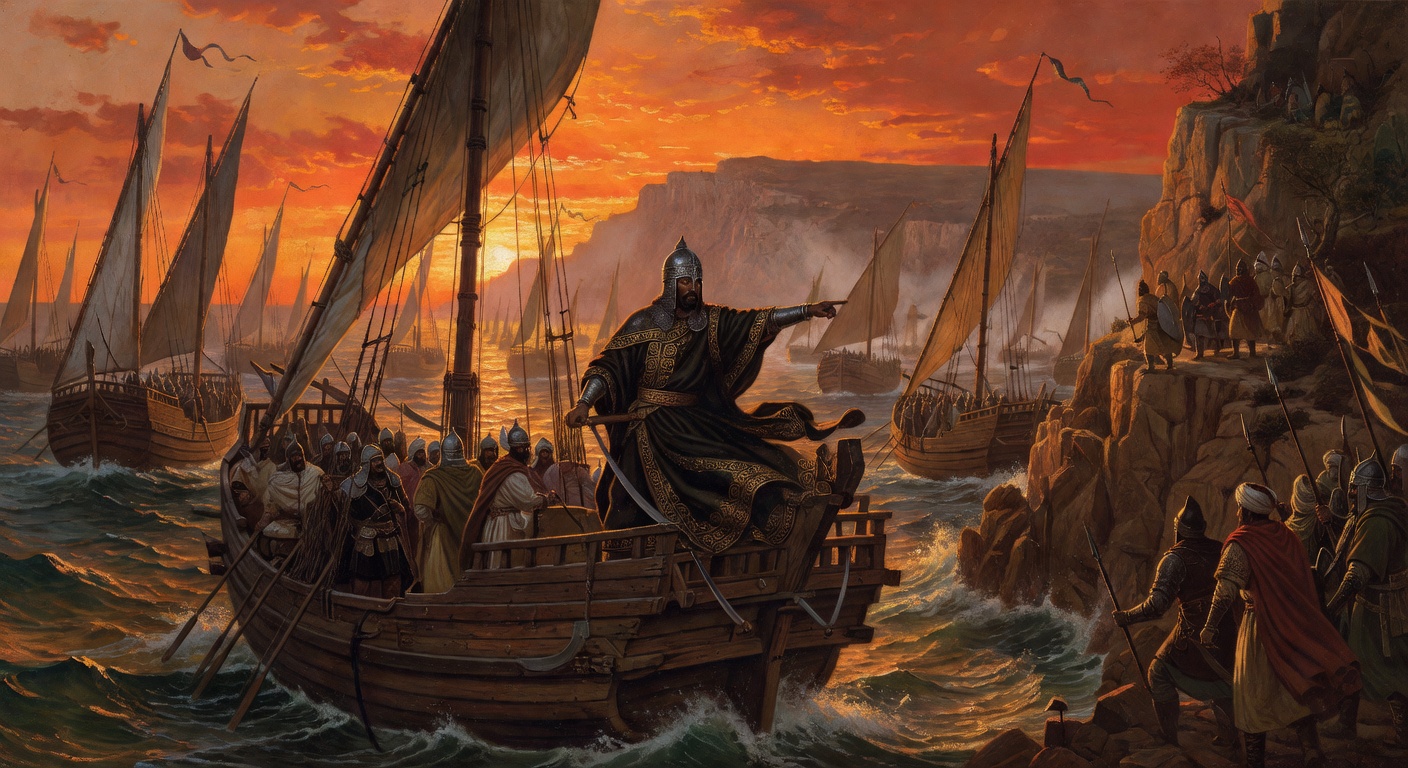
In the spring of 711 AD, Tariq ibn Ziyad, a Berber general serving under the Umayyad governor Musa ibn Nusayr, led an army of approximately 7,000 soldiers across the Strait of Gibraltar. The rock where he landed still bears his name: Jabal Tariq — the Mountain of Tariq — which became Gibraltar. What followed was one of the most decisive military campaigns in European history. At the Battle of Guadalete, Tariq’s forces destroyed the Visigothic army of King Roderic, shattering the Christian kingdom that had ruled Iberia for nearly three centuries.
The speed of the Moorish conquest was astonishing. Within just seven years, nearly the entire Iberian Peninsula had fallen under Muslim control. Cities that had languished under Visigothic rule — Toledo, Seville, Zaragoza, Lisbon — were transformed as the Moors introduced new systems of governance, irrigation, and learning. The conquest was aided by the fact that many Iberians, including Jews who had suffered under Visigothic persecution, welcomed the Moors as liberators who offered religious tolerance and economic opportunity.
The Moorish advance was only halted at the Battle of Tours in 732, when Frankish forces under Charles Martel turned back a raiding army deep in France. But Iberia itself — now called al-Andalus — had been permanently transformed. For the next nearly eight centuries, the Moors would build upon this conquered land one of the most brilliant civilizations the world has ever known, a beacon of learning and culture that would illuminate all of Europe.
The Emirate & Caliphate of Córdoba
In 756 AD, Abd al-Rahman I — the sole survivor of the Abbasid massacre of the Umayyad royal family — fled from Damascus across the breadth of the Islamic world and seized control of al-Andalus. He established the Emirate of Córdoba, an independent state that would become the jewel of medieval Europe. Under his dynasty, Córdoba was transformed into a city that dazzled the world. By the tenth century, it was the largest and most sophisticated city in Europe, with a population estimated at over 500,000, dwarfing Paris and London, which were little more than muddy towns in comparison.
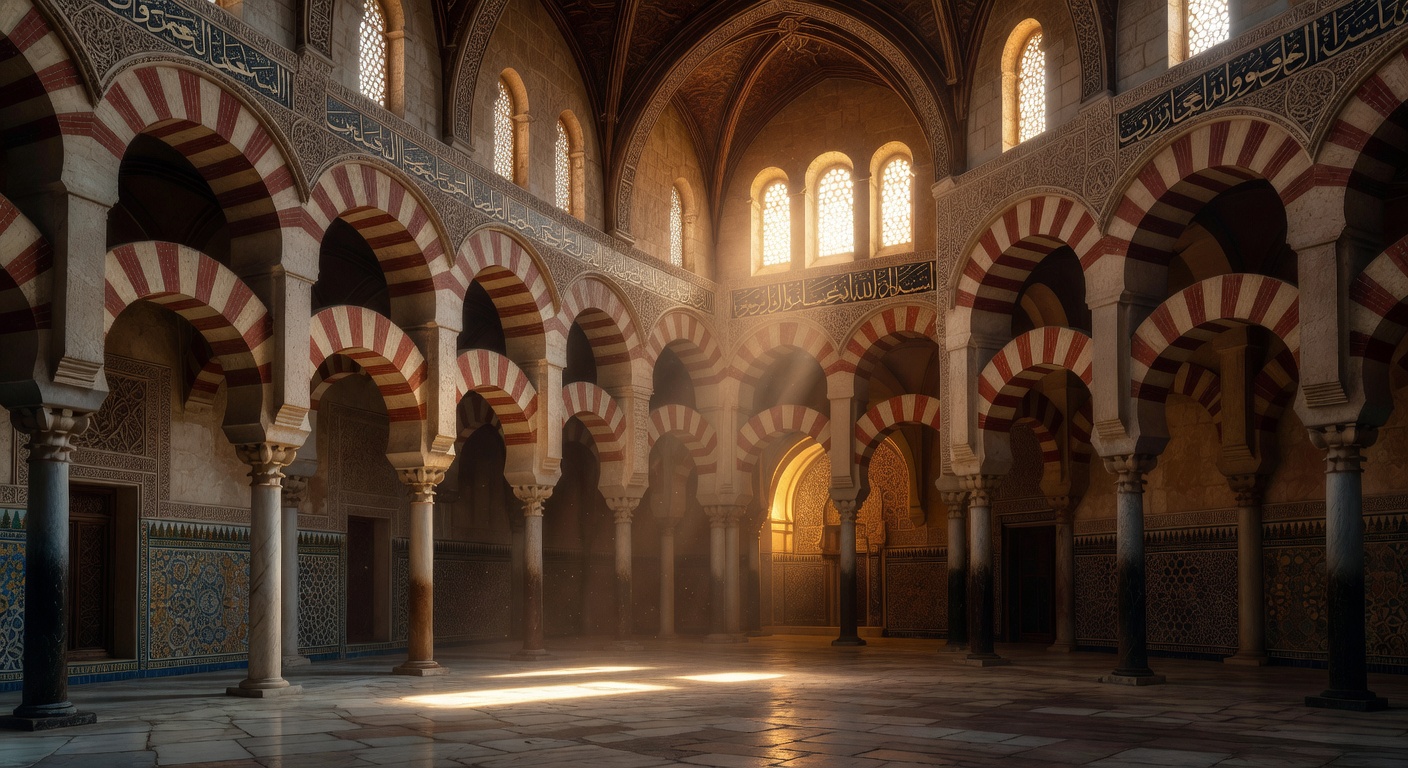
The achievements of Córdoba were staggering. The city boasted over 70 libraries, the largest containing an estimated 400,000 volumes — at a time when the largest library in Christian Europe held perhaps 400 books. Paved and illuminated streets, running water delivered through aqueducts, over 300 public baths, and a university system that attracted scholars from across the known world made Córdoba a living testament to what Moorish civilization could achieve. The Great Mosque of Córdoba, with its forest of double-arched columns and intricate geometric ornamentation, remains one of the most breathtaking structures ever built.
Under Abd al-Rahman III, who declared himself Caliph in 929 AD, the Caliphate of Córdoba reached its zenith. The royal palace-city of Medina Azahara, built on the outskirts of Córdoba, was a complex of 4,000 columns and walls inlaid with gold and ivory. Ambassadors from Constantinople, the Holy Roman Empire, and kingdoms across Africa came to pay their respects. Córdoba was not merely a regional power — it was one of the great capitals of the world, and the Moors who built it had created something unprecedented in European history.
The Golden Age of Al-Andalus
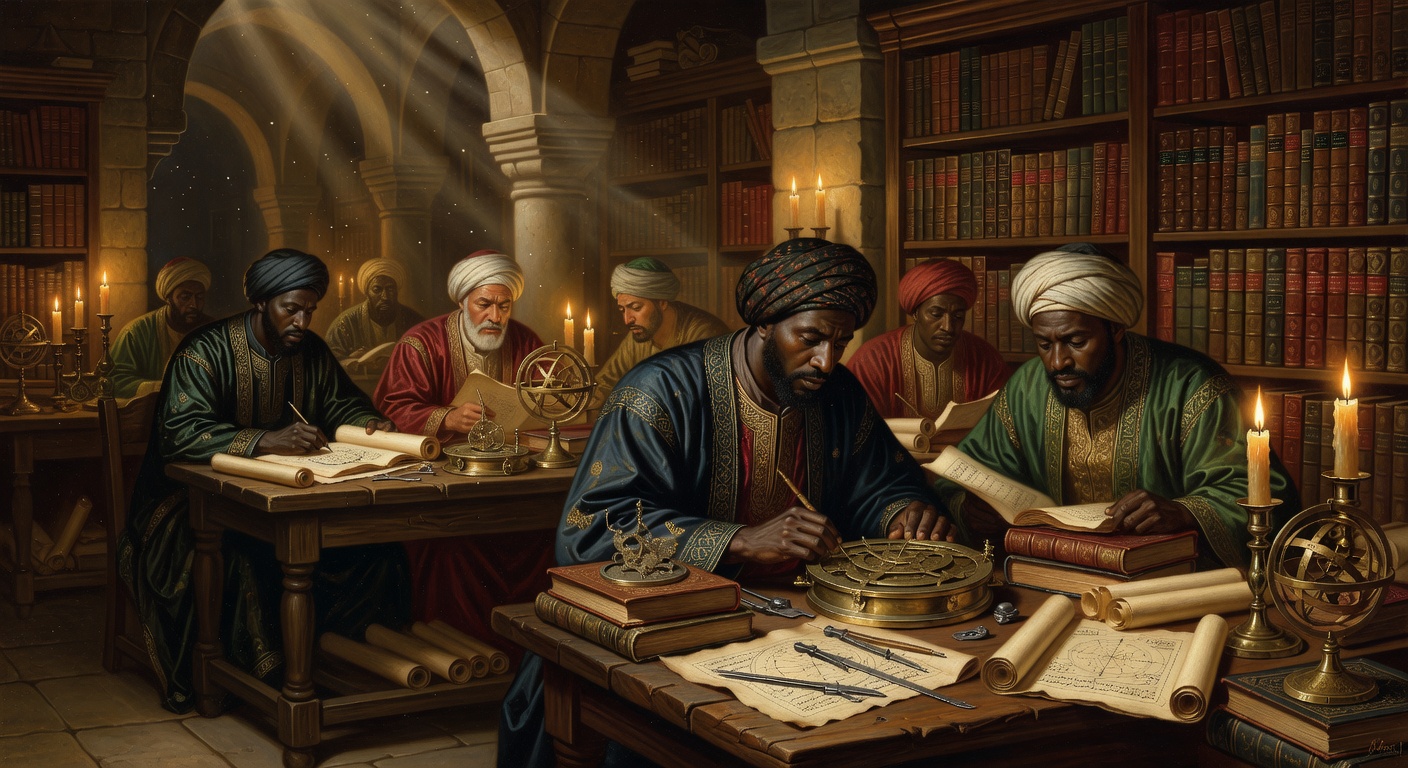
The golden age of Moorish Spain represents one of the most remarkable periods of intellectual achievement in human history. In the fields of science, Moorish scholars made advances that would not be surpassed in Europe for centuries. Al-Zahrawi (Albucasis) wrote a 30-volume encyclopedia of surgical practice that remained the standard medical reference in Europe until the Renaissance. Abbas ibn Firnas attempted controlled flight in the ninth century, centuries before Leonardo da Vinci sketched his flying machines. Moorish mathematicians refined algebra (from the Arabic al-jabr), introduced the concept of zero to Europe, and made critical advances in astronomy, optics, and chemistry.
Philosophy flourished as well, most notably through the work of Ibn Rushd (Averroes), whose commentaries on Aristotle profoundly influenced both Islamic and Christian thought, effectively reintroducing classical Greek philosophy to Europe. Maimonides, a Jewish philosopher and physician who lived and worked in Moorish lands, wrote the Guide for the Perplexed, one of the foundational texts of Jewish philosophy. This was the era of La Convivencia — the coexistence — when Muslims, Christians, and Jews lived side by side, debated in shared marketplaces, and translated one another’s texts. It was imperfect and sometimes strained, but it produced a cross-pollination of ideas unmatched anywhere else in the medieval world.
The architecture of this period stands as its most visible legacy. The Alhambra in Granada, with its mathematically perfect arabesques, its reflecting pools, and its lion-guarded courtyards, is widely regarded as one of the most beautiful buildings ever constructed. The Alcázar of Seville, the Giralda tower, and the gardens of the Generalife all testify to a civilization that understood beauty as an expression of divine order. Moorish architects pioneered the pointed arch, the ribbed vault, and the rose window — structural innovations that would later be adopted by Gothic cathedral builders across Europe, often without acknowledgment of their origins.
The Almoravid & Almohad Empires
As the Caliphate of Córdoba fragmented into competing taifa kingdoms in the eleventh century, a new force arose from the Sahara to reunify the Moorish world. The Almoravids, a Berber dynasty of devout Sanhaja warriors from present-day Mauritania, swept northward through Morocco and crossed into Iberia in 1086 under the command of Yusuf ibn Tashfin. At the Battle of Sagrajas, they inflicted a devastating defeat on the Christian king Alfonso VI of Castile, halting the Reconquista in its tracks and reunifying much of al-Andalus under a single banner.
The Almoravid empire stretched from the Senegal River to the Ebro River in Spain, creating a vast state that linked sub-Saharan West Africa with Mediterranean Europe. They founded Marrakech as their capital, built grand mosques, and promoted the spread of Islam across West Africa. When the Almoravid dynasty weakened, it was replaced by another Berber movement: the Almohads, who emerged from the Atlas Mountains under the leadership of Ibn Tumart. The Almohads were even more ambitious builders, constructing the Koutoubia Mosque in Marrakech, the Hassan Tower in Rabat, and the Giralda in Seville — masterworks of Islamic architecture that still define the skylines of those cities today.
Together, the Almoravid and Almohad empires represent a crucial chapter in Moorish history: the era when North African dynasties repeatedly crossed the Mediterranean to defend and reinvigorate Islamic civilization in Europe. They also deepened the connections between the Moorish world and sub-Saharan Africa, facilitating the trans-Saharan gold trade and the spread of Islamic learning to cities like Timbuktu, Djenné, and Gao. Their legacy is a reminder that the Moorish story is not only a European story but a profoundly African one.
Mansa Musa & the Mali Empire
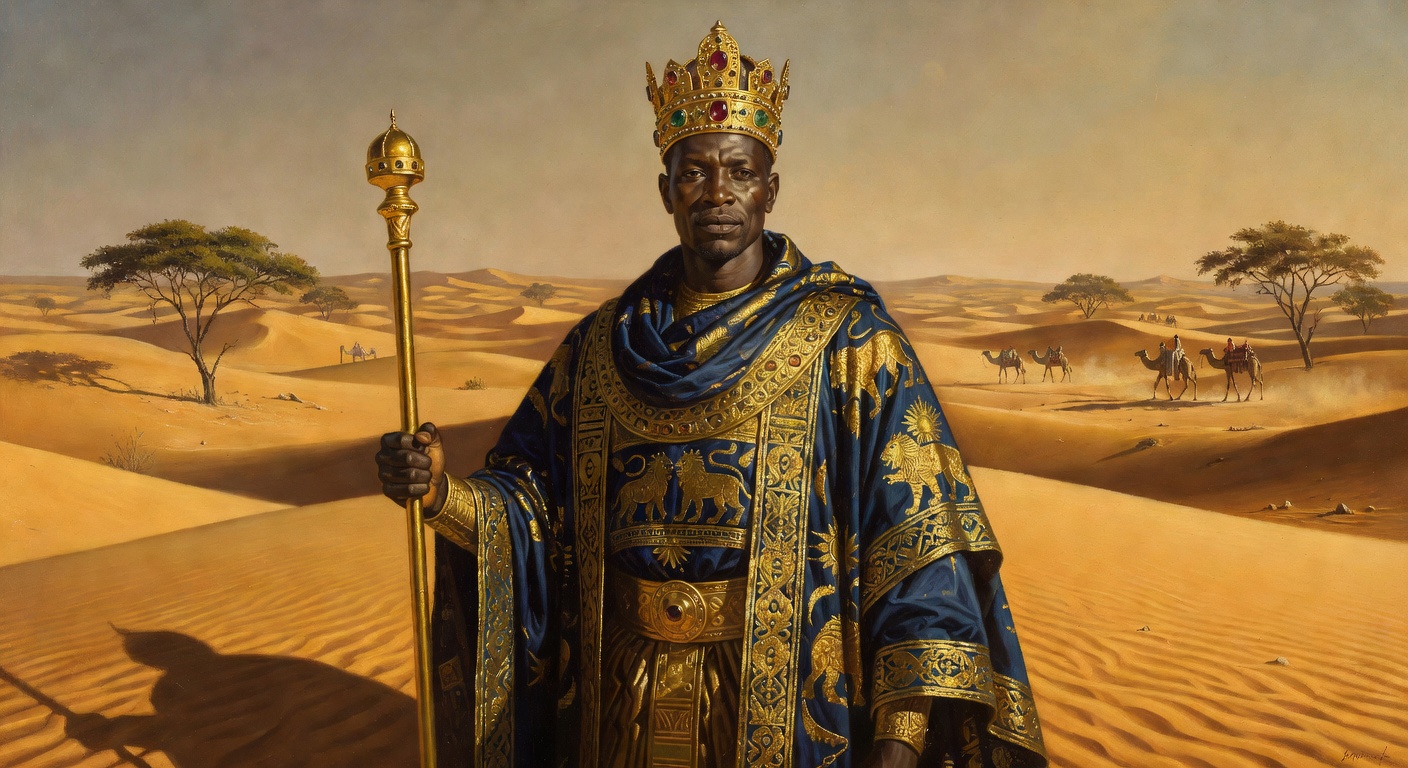
The Mali Empire, founded by Sundiata Keita around 1235 AD after his victory at the Battle of Kirina, grew into one of the largest and wealthiest empires in world history. At its zenith under Mansa Musa I (r. 1312–1337), Mali controlled an area roughly the size of Western Europe, encompassing modern-day Mali, Senegal, Gambia, Guinea, Mauritania, and parts of neighboring states. The empire sat atop some of the richest gold deposits on earth, and Mansa Musa exploited this wealth to build a state of astonishing grandeur.
In 1324, Mansa Musa embarked on a hajj to Mecca that would become one of the most famous journeys in history. His caravan was said to include 60,000 men, 12,000 slaves each carrying four pounds of gold bars, and 80 camels carrying between 50 and 300 pounds of gold dust each. When the caravan passed through Cairo, Mansa Musa distributed so much gold in gifts and alms that he crashed the Egyptian gold market for over a decade, causing severe inflation throughout the Mediterranean world. European cartographers took note: the 1375 Catalan Atlas famously depicts Mansa Musa seated on his throne, holding a gold nugget, and he remains the richest person in recorded history by most modern estimates.
But Mansa Musa’s legacy extends far beyond wealth. Upon returning from his pilgrimage, he brought architects, scholars, and books back to Mali. He commissioned the construction of grand mosques in Timbuktu and Gao, expanded the University of Sankore, and transformed his empire into a center of Islamic learning. Under his patronage, Timbuktu became a city that drew scholars from across the Muslim world — a city of books, debate, and intellectual achievement that rivaled any in the Islamic sphere. The Mali Empire proved that sub-Saharan Africa could produce civilizations of the very highest order.
Timbuktu — City of Scholars
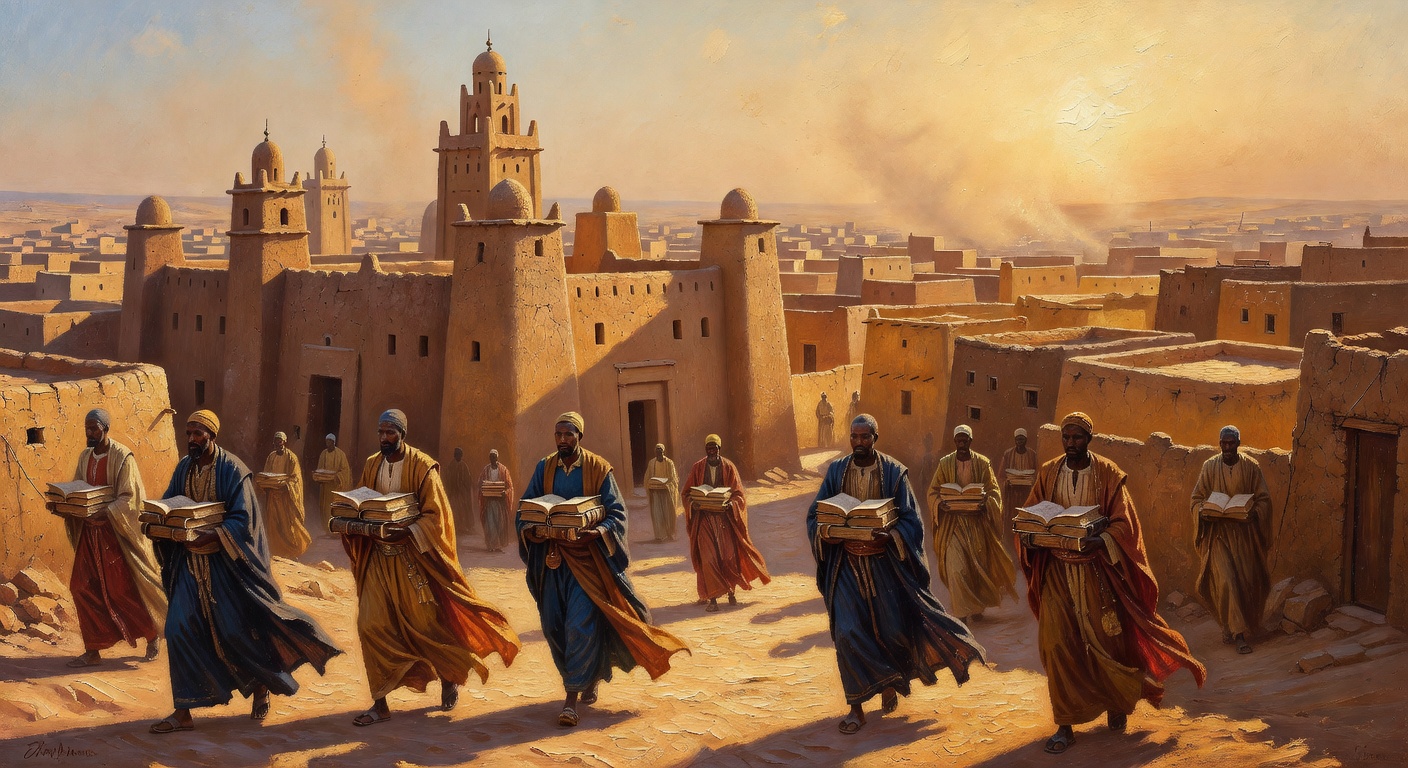
In the popular Western imagination, Timbuktu is a synonym for the end of the earth — a place so remote it might as well be mythical. The reality could not be more different. At its height in the fifteenth and sixteenth centuries, Timbuktu was one of the great intellectual capitals of the world, a city where books were valued more than gold and where scholars commanded the highest social prestige. The University of Sankore, founded in the fourteenth century, enrolled as many as 25,000 students at a time when the population of the city itself was roughly 100,000 — meaning one in four residents was a student or scholar.
Timbuktu’s libraries held hundreds of thousands of manuscripts on subjects ranging from astronomy, mathematics, and medicine to law, theology, and poetry. These texts were written in Arabic and in African languages using the Arabic script, and they represented a vast indigenous African intellectual tradition that defied every European stereotype about the continent. Scholars like Ahmed Baba al-Timbukti, who authored more than 40 works on Islamic jurisprudence and history, were celebrated across the Muslim world. The city’s position at the crossroads of the trans-Saharan trade routes — where the Niger River met the southern edge of the Sahara — made it a natural hub for the exchange of ideas as well as goods: gold, salt, ivory, and enslaved people moved through its markets, alongside books and scholarly correspondence.
Today, the manuscripts of Timbuktu represent one of the most important — and most endangered — cultural heritages in the world. Hundreds of thousands of manuscripts survive in private family collections and public archives, many still unread and unstudied. Efforts to digitize and preserve these texts are ongoing, but the sheer volume of material is staggering. Every page is a rebuke to the myth that Africa had no written history, and every library a monument to the Moorish and African intellectual tradition that once made Timbuktu the envy of the world.
The Reconquista & Fall of Granada
The Reconquista — the Christian reconquest of the Iberian Peninsula — was not a single event but a centuries-long process of warfare, diplomacy, and cultural transformation. The turning point came at the Battle of Las Navas de Tolosa in 1212, when a coalition of Christian kingdoms crushed the Almohad army, breaking Muslim military power in Iberia. Over the next two centuries, the great Moorish cities fell one by one: Córdoba in 1236, Valencia in 1238, Seville in 1248. By the late fifteenth century, only the Nasrid Kingdom of Granada remained — a small but brilliantly cultured state nestled in the mountains of southern Spain.
The Nasrid dynasty, despite its precarious position, produced some of the finest achievements of Moorish civilization. It was under the Nasrids that the Alhambra reached its final, breathtaking form — the Court of the Lions, the Hall of the Ambassadors, the intricately carved stucco walls bearing the inscription “There is no victor but God.” Granada was a city of poets, musicians, silk weavers, and scholars, a last flowering of Andalusian culture even as the walls closed in. But the marriage of Ferdinand of Aragon and Isabella of Castile in 1469 united the two most powerful Christian kingdoms, and the final siege of Granada began in 1491.
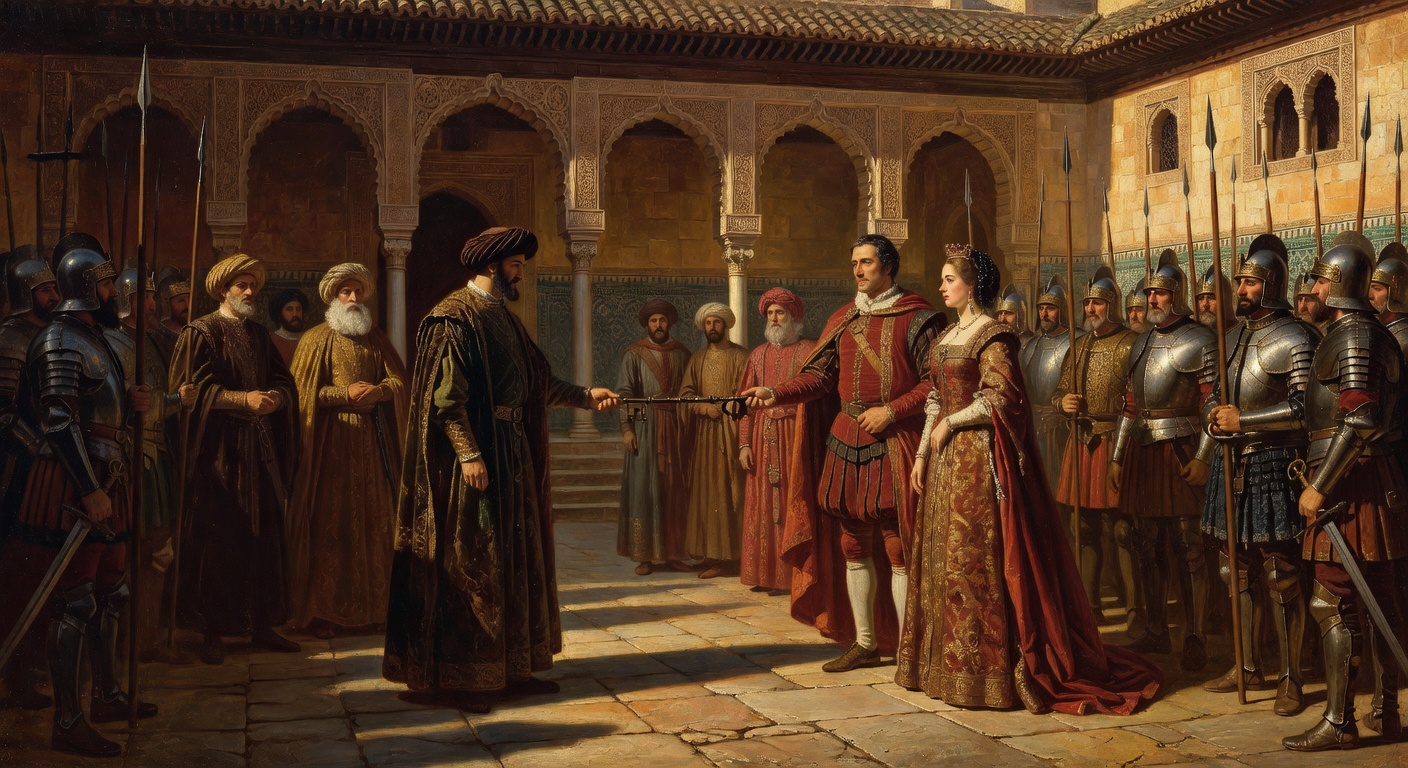
On January 2, 1492, Muhammad XII (Boabdil) surrendered the keys of Granada to Ferdinand and Isabella, ending nearly 800 years of Moorish presence in Iberia. Legend holds that as Boabdil looked back at his lost city from a mountain pass, he wept, and his mother admonished him: “You weep like a woman for what you could not defend as a man.” The pass is still called El Suspiro del Moro — The Moor’s Sigh. What followed was devastating: the forced conversion, expulsion, and persecution of Muslims and Jews under the Spanish Inquisition, erasing centuries of pluralistic coexistence and scattering the Moorish diaspora across North Africa and the Ottoman Empire.
The Moorish Legacy
The expulsion of the Moors from Spain did not erase their influence — it merely obscured it. The legacy of Moorish civilization is woven into the very fabric of the modern Western world, often unacknowledged but impossible to ignore. The English language contains over 4,000 words of Arabic origin, from “algebra” and “algorithm” to “cotton,” “magazine,” and “zero.” Spanish is even more deeply marked: an estimated 8,000 Spanish words derive from Arabic, including place names like Guadalquivir (Wadi al-Kabir, “the Great River”) and architectural terms like alcazar, azulejo, and almohada.
Moorish agricultural innovations transformed the landscapes of Southern Europe. The Moors introduced irrigation systems, waterwheels, and new crops — oranges, lemons, rice, cotton, sugarcane, saffron, and almonds — that remain staples of Mediterranean agriculture today. Their architectural influence extends far beyond the Alhambra: the pointed arch, the ribbed vault, and the ornamental use of geometric tilework all passed from Moorish builders to the Gothic and Renaissance traditions. The very concept of the European university owes a debt to Moorish models of organized higher learning, and the scientific knowledge preserved and advanced by Moorish scholars — from Aristotle’s philosophy to Ptolemy’s astronomy — provided the intellectual foundation for the European Renaissance.
Today, a growing movement seeks to reclaim and celebrate Moorish identity and heritage. From the scholars working to preserve the manuscripts of Timbuktu to the cultural tours that trace the Moorish footprint across Spain, Portugal, and Morocco, a new generation is ensuring that the story of the Moors is no longer hidden. The Moorish legacy is not a relic of the past — it is a living heritage, a reminder that Africa and the Islamic world were not bystanders in the making of modern civilization but among its principal architects. This museum exists to tell that story, and every exhibit you have explored here is an invitation to look deeper, to question the narratives you were taught, and to recognize the full scope of human achievement.